AI Reading Investigation
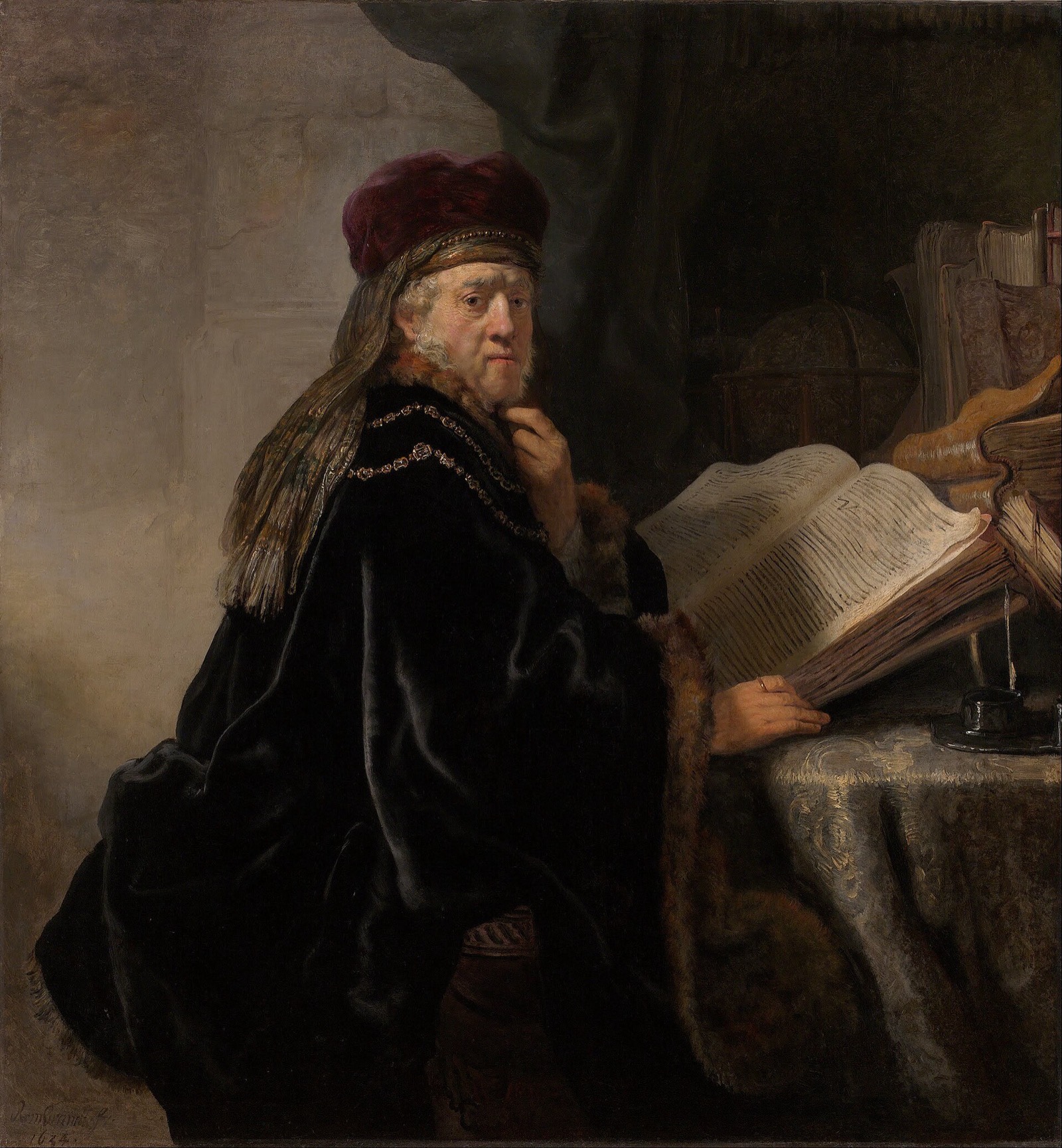
Rembrandt, A Scholar Seated at a Desk, 1634. National Gallery Prague.
Rembrandt, A Scholar Seated at a Desk, 1634. National Gallery Prague.
Some readings are hard because they’re long, dense, or packed with unfamiliar context, and students will reach for AI whether you invite them to or not. So invite them, and shape what happens next. Instead of asking for a summary, students work through a sequence of prompts that treats AI as a smart but unreliable study partner. It helps them get oriented, name the argument, find the passages worth rereading, and try out interpretations. Then they go back to the article and check.
Part of a course
One of several AI-first assignments in a remote, asynchronous course. Start With the AI Answer explains how they fit together, alongside the assignments that ask for no AI.
Pick an article with a clear question that is longer or denser than it needs to be, the kind students skim and misremember. Frame one or two central questions the reading answers. In the version I ran, the article was Steven Shapin’s “Trusting George Cheyne,” and the question was simple: why did people trust this person, and what does that reveal about how expertise worked?
Before opening AI, students jot down two or three quick notes: what they think the article is doing, and what seems confusing.
Then the prompt sequence, which students can adapt as they go. Each prompt does a different job:
The post (~400 words, written by the student) is organized around five points: one useful AI insight, one AI claim they verified in the article, one AI claim that was vague, wrong, or needed correction, one passage they understand better because of the exchange, and their own answer to the central question.
The first prompt sets the tone for the sequence. Adapt the article, the course, and the emphasis:
first prompt in the sequence
I am reading [author, title] for a course on [subject]. Give me a concise orientation to the article: what question is the author asking, what is the main argument, how is evidence used, and what historical problem is the author trying to solve? Do not provide a flat, high-level summary of topics. Focus on the argument and evidence.
last prompt in the sequence
I need to write my own reading reflection. Here is my current possible angle: [paste your own rough idea]. Based on our discussion, give me a few ways I might sharpen or complicate it. Do not write the reflection for me. For each suggestion, tell me what evidence from the article I would need to verify before using it.
The sequence models a better habit than the one students arrive with. Their default, “summarize this,” flattens the article and gives them no reason to open it. Every prompt here points back into the text (a passage to reread, a claim to check, a piece of evidence to find), so the AI conversation becomes a trail of leads instead of a substitute.
The post makes verification the deliverable. Students name one claim they confirmed and one they had to correct, so they can’t finish without going back to the article. Hunting for a vague or wrong claim teaches them what AI smooths out: tone, hedging, the texture of the evidence.
The last prompt flips the usual roles. The student brings the idea and AI plays critic, which keeps the reflection theirs while still putting AI to work at the writing stage.
The grade rests on the movement between AI and the article: what the student checked, corrected, and understood better.
Try the sequence yourself on the article first. Some articles are well represented in training data and some aren’t, and whether students upload the PDF changes the answers considerably. Knowing what AI tends to get wrong about this particular reading helps you steer the discussion.
This sketch is licensed under Creative Commons BY-NC-SA 4.0. You're welcome to share and adapt it for noncommercial purposes, with credit, as long as you share your adaptation under the same license.
Image Rembrandt, A Scholar Seated at a Desk, 1634. National Gallery Prague. The image's own license applies to it, separately from the sketch.
Suggested citation
Fred Gibbs. "AI Reading Investigation." AI Sketchbook, Amaranth, University of New Mexico, September 25, 2026. https://amaranth.unm.edu/ai-sketchbook/teaching/ai-reading-investigation.html. Licensed under CC BY-NC-SA 4.0.