Let’s experiment together
Amaranth is a studio in the original sense: a place where you come to learn, experiment, fail and make things, even if they aren’t what you had in mind. We work alongside you, exploring technical and design decisions. When you leave, your comfort is a little higher and your boundaries a little further than they were.
We liken it to a pottery wheel: the clay is yours, the ideas are yours. We’re at the wheel with you, hands in the same clay, teaching the motion. When the session ends, you leave knowing how to center the clay—not just holding a pot someone else threw. A humanist who understands why a particular design or technical choice works can continue to learn and innovate more than one who outsourced those decisions.
What we do
Through collaborative projects, open-source tools, and hands-on experimentation, Amaranth supports:
- Public-facing websites built on open infrastructure, owned by their creators, designed to last
- Audio and narrative work—oral histories, podcasts, ScrollStory essays—where medium and message reinforce each other
- 3D fabrication for teaching, research, and exhibition
- Poster design and large-format printing for conferences and public display
- AI-assisted workflows that put scholars in the editorial seat
We’re not organized around equipment or software. We’re organized around what people are trying to communicate—and who they’re trying to reach.
On AI
We think AI is one of the most interesting tools to arrive in the humanities in a long time—not because it replaces humanistic thinking, but because it lets more people do more of it. AI can help you search across hundreds of documents for patterns you’d never spot by hand, generate rough visualizations to think with, transcribe hours of oral histories in minutes, or explore questions at a scale that used to require a programming background. But AI also hallucinates, flattens nuance, and has no sense of what actually matters. That’s where you come in. We help people use AI thoughtfully—as a starting point for inquiry, not an endpoint. If you’re curious, skeptical, or somewhere in between, that’s exactly the right place to start. How we approach AI pedagogy →
Design resources
Design is central to visual communication. To that end, the studio maintains a collection of introductory design books—basic principles, typography, design history, visual inspiration. Good design isn’t about professional credentials, it’s about taking seriously how your work reaches an audience. Whether you’re designing a poster for a conference, laying out a website, or choosing typefaces for a digital exhibit, thoughtful visual decisions strengthen your argument. Come browse the collection during studio hours!
Digital humanities at UNM
Amaranth is UNM’s home for digital humanities work—connecting people across departments who might not otherwise know they’re working on related questions. If you’re new to the field or want to understand where Amaranth fits in its history and current moment, the digital humanities page is a good place to start.
Why Amaranth?
The name comes from the Greek amarantos: unfading. There’s a deliberate irony in naming a digital humanities studio after a symbol of permanence, given how quickly technology becomes obsolete. We embrace the contradiction—and the richer story of a plant that has meant sacred grain, colonial threat, superfood, and superweed, depending on who’s growing it and why.
Team

Director
Fred Gibbs
Fred sets strategic direction for Amaranth, with a focus on outreach, grant writing, and lowering technical barriers for humanists.
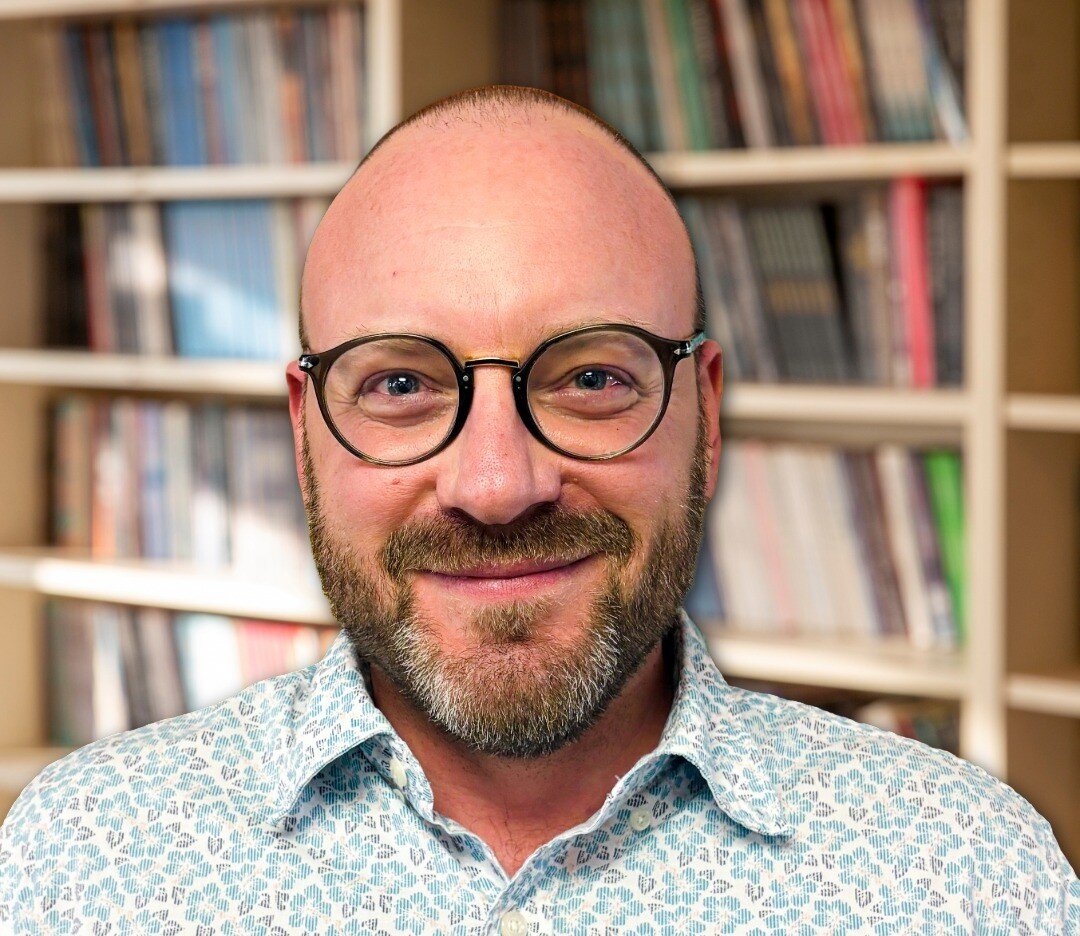
Studio Manager
Jonathan Seyfried
Jonathan manages the daily operations of the studio, including project management, studio consultations, class visits, and equipment support.