The audience is real.
A collaborative class website changes the stakes of a course assignment. Instead of writing a paper that only one person reads, students contribute to a shared project that lives on the open web—visible to future students, to communities, to anyone searching for the topic. Each contribution is small, but together they create something no one person could build alone.
That shift—from private exercise to public contribution—changes how students think about their work. They write more carefully, design more intentionally, and care more about clarity when they know real people will encounter what they’ve made.
Designing for an audience
Building a page on a collaborative website is a design challenge as much as a writing one. Students have to think about visual hierarchy: what does a reader see first? How do images and text work together to tell a story? How does the page guide someone through an argument? These are communication skills that transfer far beyond a single course—and they’re exactly the kind of skills that humanities graduates need but rarely get to practice.
Digital literacy without coding
Our platform teaches students how the web actually works—how content is structured, how styling shapes design, how version control lets a group collaborate without overwriting each other’s work—without requiring them to learn programming. They edit text files, drag and drop them into GitHub, and see their work published. The process is simple enough to learn in a class session, but the understanding it builds lasts.
Built to last
Commercial website builders lock content into proprietary platforms that charge subscription fees and can disappear without warning. Our sites run on GitHub Pages—free, open, and built on web standards that will still work decades from now. The Santa Fe Trail project below hasn’t been touched in eight years and works exactly as it did on day one. That’s sustainability by design, not by accident.
How it works
The process is the same for instructors and students: create a free GitHub account, duplicate the project template, and start adding pages. Students write in Markdown—a simple formatting syntax—and submit their work through GitHub. No special software, no server administration, no technical background required. Our getting started guide walks through every step, and we’re always happy to visit a class to help.
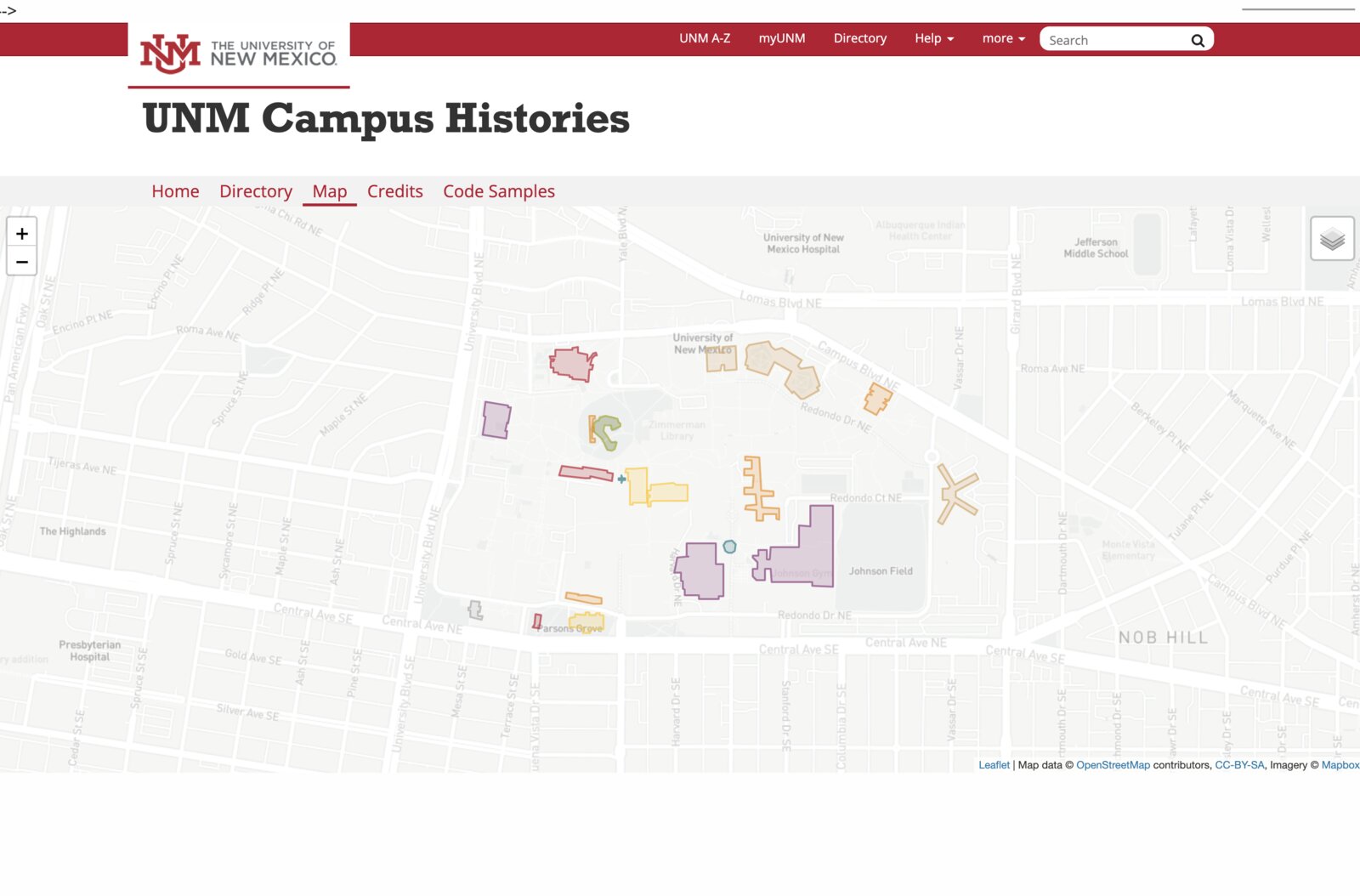
Campus Histories
Built on our latest version of Xanthan, essays here have the most functionality of the bunch. The site is wrapped in the standard UNM web style.
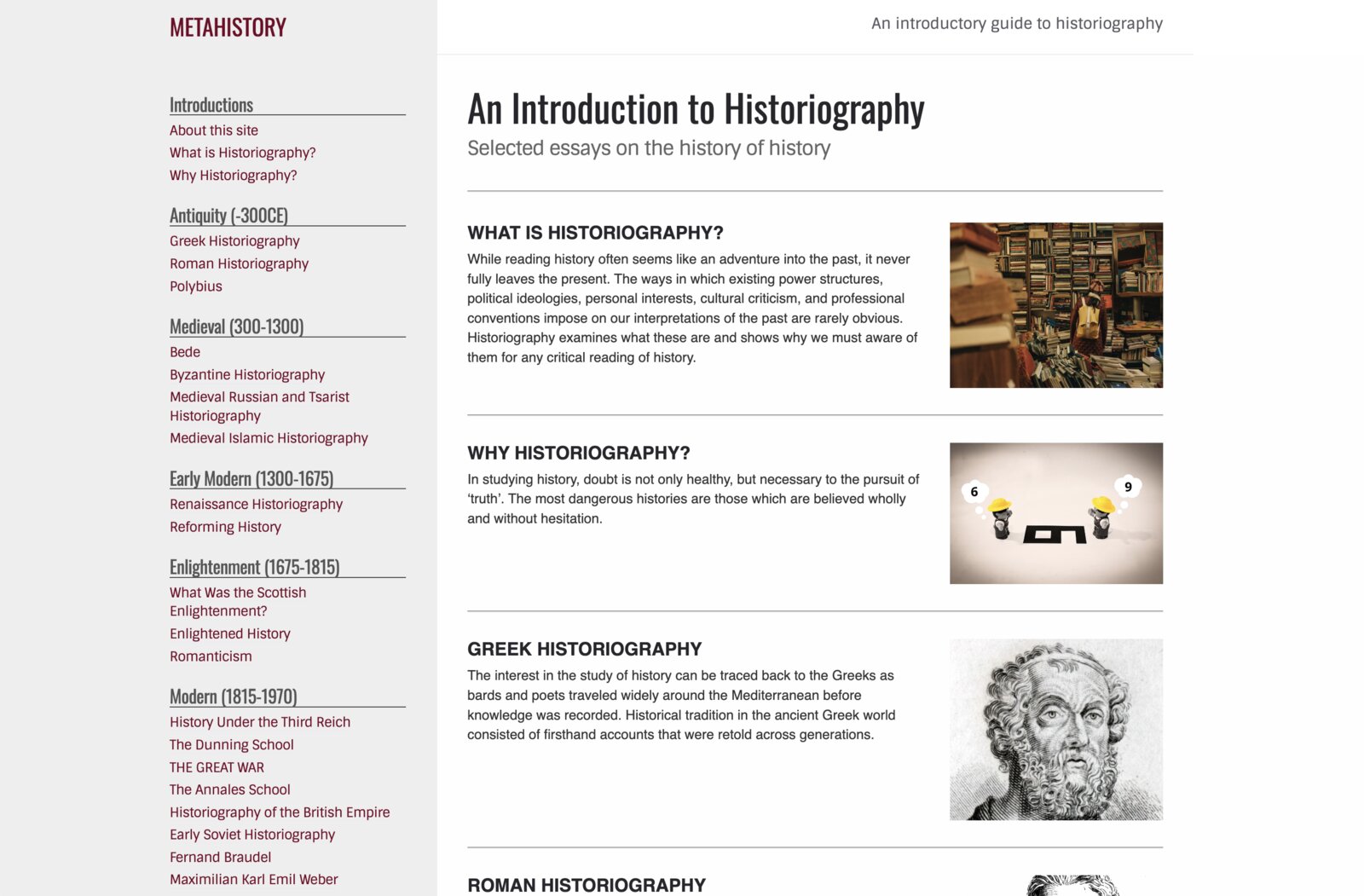
Metahistory
This site shows a permanent left-nav feature and a table of contents page. As students add their pages, the website automatically grabs metadata from their new page to add it to the table of contents.
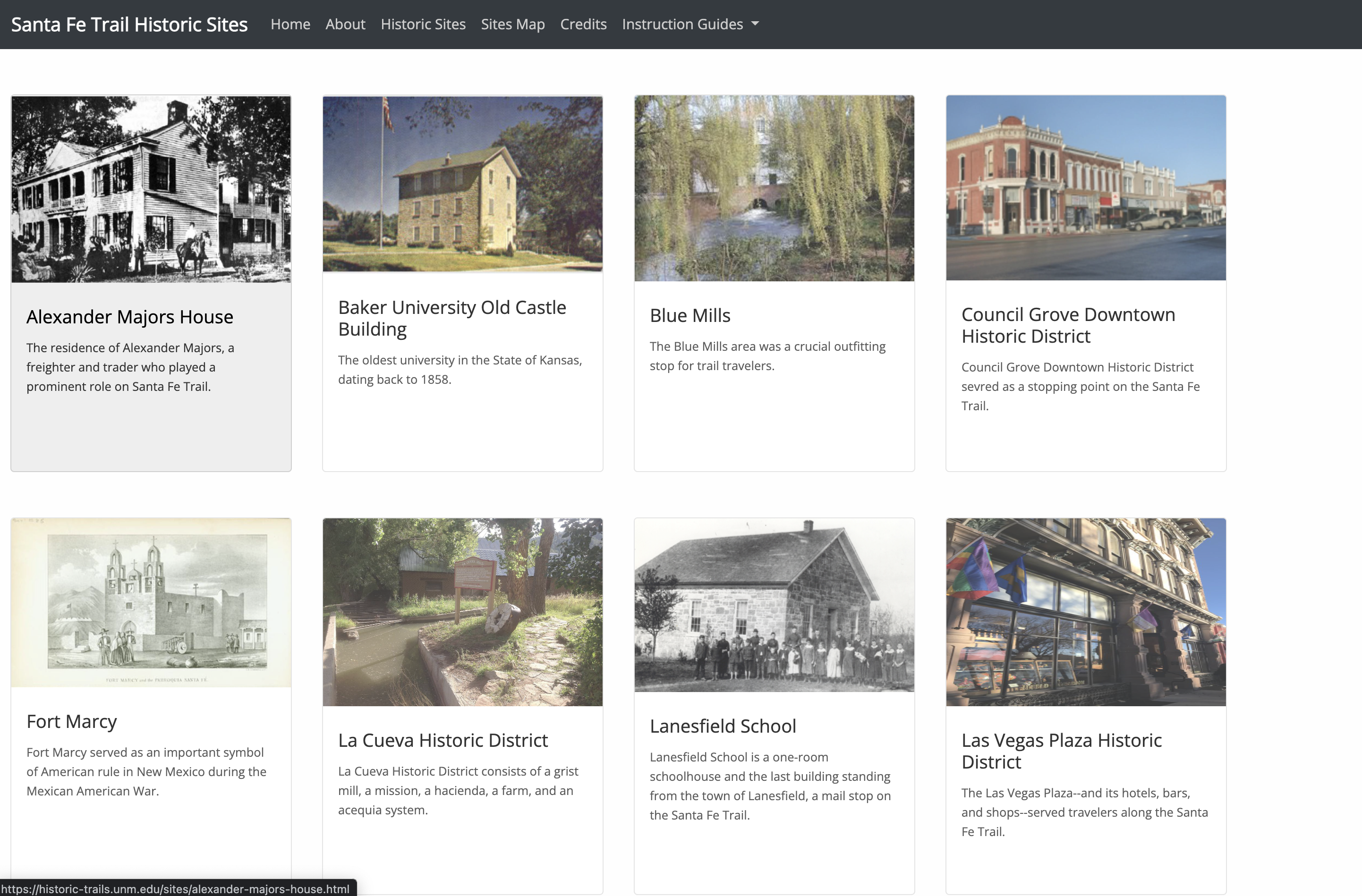
Santa Fe Trail Sites
This very early site has not been updated in about eight years, and everything works just as when it was last active. It is still ready for new contributions!