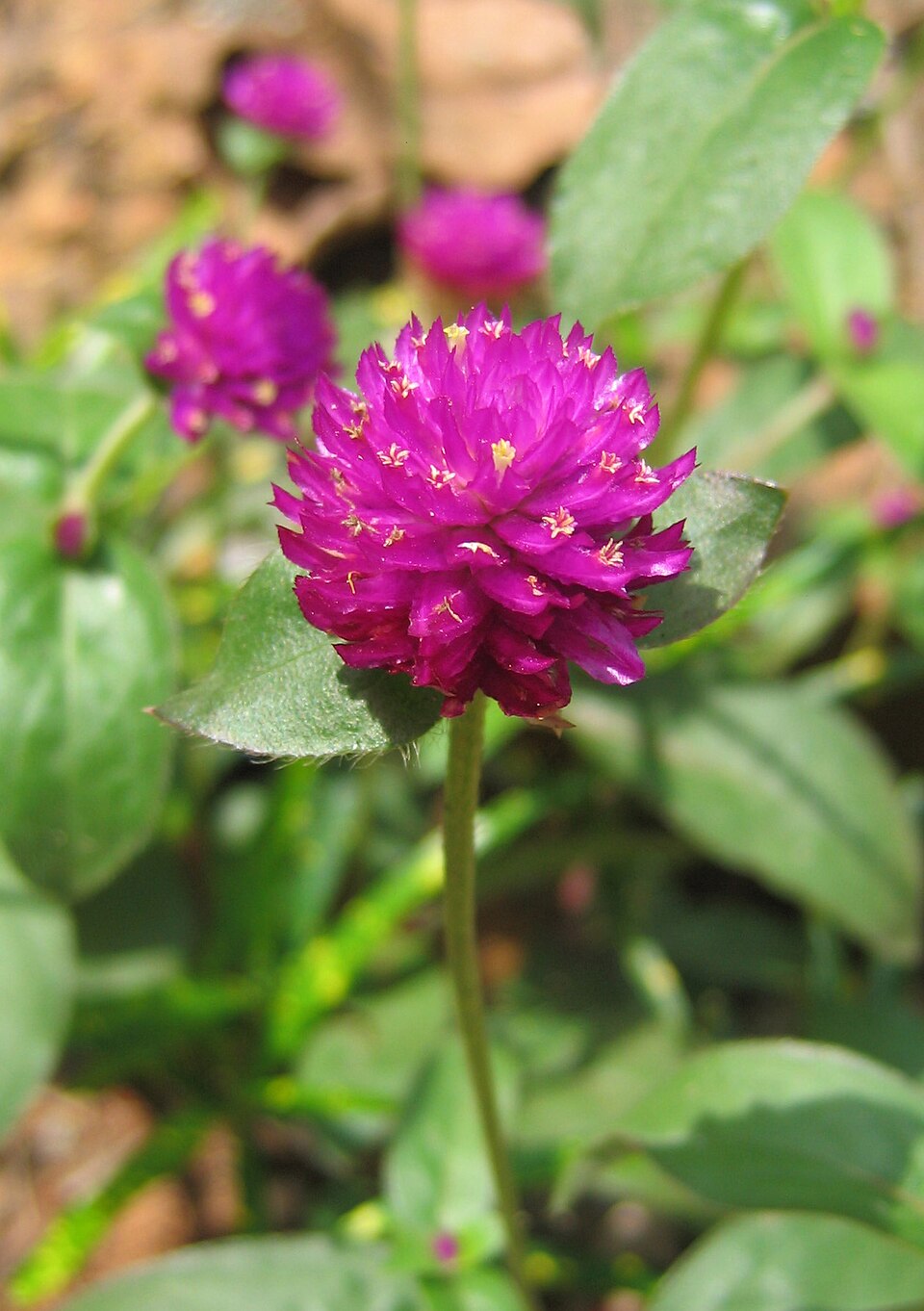
Globe amaranth flowers retain their color even after drying, embodying their Greek name meaning ‘unfading.’
When we chose a name for UNM’s digital humanities studio, we wanted something that captured both the promise and the paradox of working with technology in the humanities. We landed on amaranth—a name with roots stretching back thousands of years, still relevant today, and carrying contradictory meanings that characterize much of the humanities.
The word comes from the Greek amarantos (ἀμάραντος), meaning “unfading” or “one that does not wither.” That association with endurance made amaranth useful for thinking about immortality, memory, and grief. The Greeks hung amaranth wreaths in temples, used it to decorate images of the gods, and placed it on tombs as a symbol of eternal remembrance. Amaranth flowers sprang from the blood of Adonis when he died, and garlands of amaranth adorned the mourning of Achilles.
What amaranth means here
A flower that does not fade becomes a way to think about what cultures hope will last: memory, honor, grief, beauty, and the desire to remain connected to what time takes away.
There’s a playful irony in naming a digital humanities studio after a symbol of permanence. Digital technology is notorious for its rapid obsolescence—file formats become unreadable, platforms disappear, links rot, and today’s impressive tool becomes tomorrow’s abandoned project. We embrace this challenge, and we hope our tools and processes lengthen the lifespan of our projects. But we also acknowledge the contradiction: we’re building with materials that fade faster than our ancient flower ever did.
In John Parkinson's 1629 *Paradisi in Sole Paradisus Terrestris*, amaranthus appears as Flower-gentle: a plant valued because its gathered flowers could retain their color long after cutting.
From Garden Book to Epic Poem
By the seventeenth century, amaranth was not only an ancient emblem. It was also a living garden plant, named and pictured in English books, valued for the same quality that made it symbolically useful: it seemed to resist fading. That gives later literary uses of amaranth a local, material context as well as a mythic one.
Milton’s Immortal Amarant
Milton is not the reason Amaranth exists, but his use of the flower shows how far the “unfading” idea traveled. In Paradise Lost (1667), he gathers the plant’s botanical reputation and symbolic history into a single image: angels in heaven casting down crowns woven with “amarant and gold”:
Immortal amarant, a flower which once
In Paradise, fast by the Tree of Life,
Began to bloom; but soon, for Man’s offence,
To Heaven removed, where first it grew, there grows
And flowers aloft shading the Fount of Life…
William Blake’s The Temptation and Fall of Eve (1808), an illustration for Paradise Lost. The image belongs to the poem’s visual tradition, though it does not depict Milton’s amaranth passage directly.
Milton imagines amaranth as originally growing in the Garden of Eden, near the Tree of Life. After humanity’s fall, God transplants it to heaven, where it continues to bloom eternally, shading the “Fount of Life.” The angels weave it into their crowns precisely because it never fades.
That is the useful part of the Milton thread for us: not immortality as a promise, but endurance as an aspiration. Digital humanities projects do not escape time. But they can be built with enough care, openness, and community investment to remain accessible and meaningful longer than the platforms around them.
What amaranth means here
Milton turns the unfading flower into an image of care after loss: something removed from Eden, preserved elsewhere, and made meaningful through memory.
Sacred Grain of the Americas
But amaranth isn’t just a symbol from Greek mythology and English poetry. It’s also a plant—or rather, a family of more than sixty plant species—with a remarkable history in the Americas.
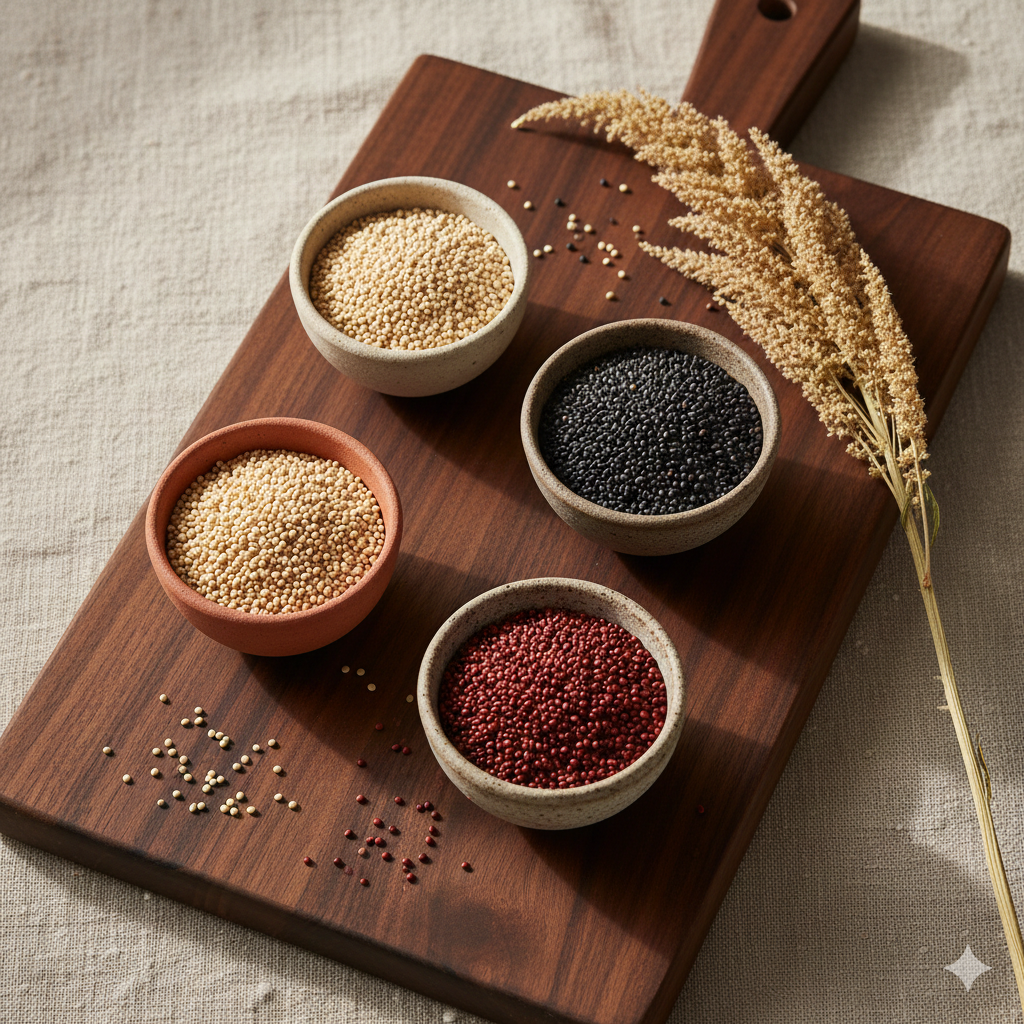
Amaranth grain, cultivated in the Americas for at least 8,000 years, was a dietary staple rivaling corn in importance.
Archaeological evidence suggests that people in Mesoamerica began cultivating amaranth around 6000 BCE, making it one of the oldest domesticated crops in the Western Hemisphere. By the time the Aztec Empire rose to power in the fifteenth century, amaranth—known as huāuhtli in Nahuatl—had become one of the three primary tribute crops, alongside maize and beans. Some scholars estimate that amaranth provided up to 80% of the Aztec diet’s caloric energy.
The Aztecs didn’t just eat amaranth. They considered it sacred. During religious festivals, they mixed amaranth flour with honey (and sometimes blood from ritual sacrifices) to create a dough called tzoalli. They shaped this dough into figures of their gods, particularly Huitzilopochtli, the god of war and the sun. At the end of the festival of Panquetzaliztli, priests would break apart the amaranth statues and distribute pieces to the people, who consumed them as a form of communion with the divine.
The meaning of amaranth was never contained in the plant alone. It lived in the rituals, stories, prohibitions, markets, and memories built around it.
What amaranth means here
A crop becomes more than nutrition when it carries ritual, identity, and shared practice. The humanities help us see food as culture, not just calories.
The Forbidden Grain
The Codex Mendoza image behind this section shows tribute accounting, not amaranth itself. The visible gloss identifies dried chile bundles. That distinction matters: the image is useful here as evidence of the colonial recordkeeping world in which tribute crops, sacred foods, and indigenous practices were named, categorized, and controlled.
When Spanish conquistadors arrived in the sixteenth century, they immediately recognized amaranth’s spiritual significance—and saw it as a threat to their mission of Christian conversion.
The practice of shaping amaranth into gods and consuming it as communion struck the Spanish as a demonic parody of the Eucharist. In their campaign to suppress indigenous religion, colonial authorities banned the cultivation of amaranth. The punishment for growing or possessing the grain could be severe: some accounts describe offenders having their hands cut off.
Survival in Secret
Despite the prohibition, amaranth never disappeared. Indigenous farmers continued cultivating it in secret, preserving seeds in hidden gardens, passing knowledge from generation to generation. The grain survived in remote mountain villages and marginal lands where colonial oversight was weak.
This history of suppression and survival resonates with broader patterns in the humanities. Powerful institutions often try to control what knowledge gets preserved and transmitted. Sometimes the most important cultural materials are the ones that persist despite official neglect or active destruction.
What amaranth means here
The same plant that sustained one community became threatening to another system of power. Preservation is never only technical; it is cultural, political, and often contested.
not sure
A Modern Revival
For centuries, amaranth remained a marginal crop, known mainly to indigenous communities and a few botanists. That began to change in the 1970s, when the American health food movement rediscovered this “ancient grain.”
Modern amaranth products marketed as superfoods. The grain’s complete protein profile and high nutrient density have fueled its commercial revival.
Nutritional analysis revealed what indigenous peoples had known for millennia: amaranth is remarkably nutritious. Unlike most grains, it contains all nine essential amino acids, making it a complete protein—rare for a plant food. It’s rich in iron, magnesium, phosphorus, and fiber. It’s naturally gluten-free. In an era of increasing interest in plant-based diets and sustainable agriculture, amaranth seemed almost too good to be true.
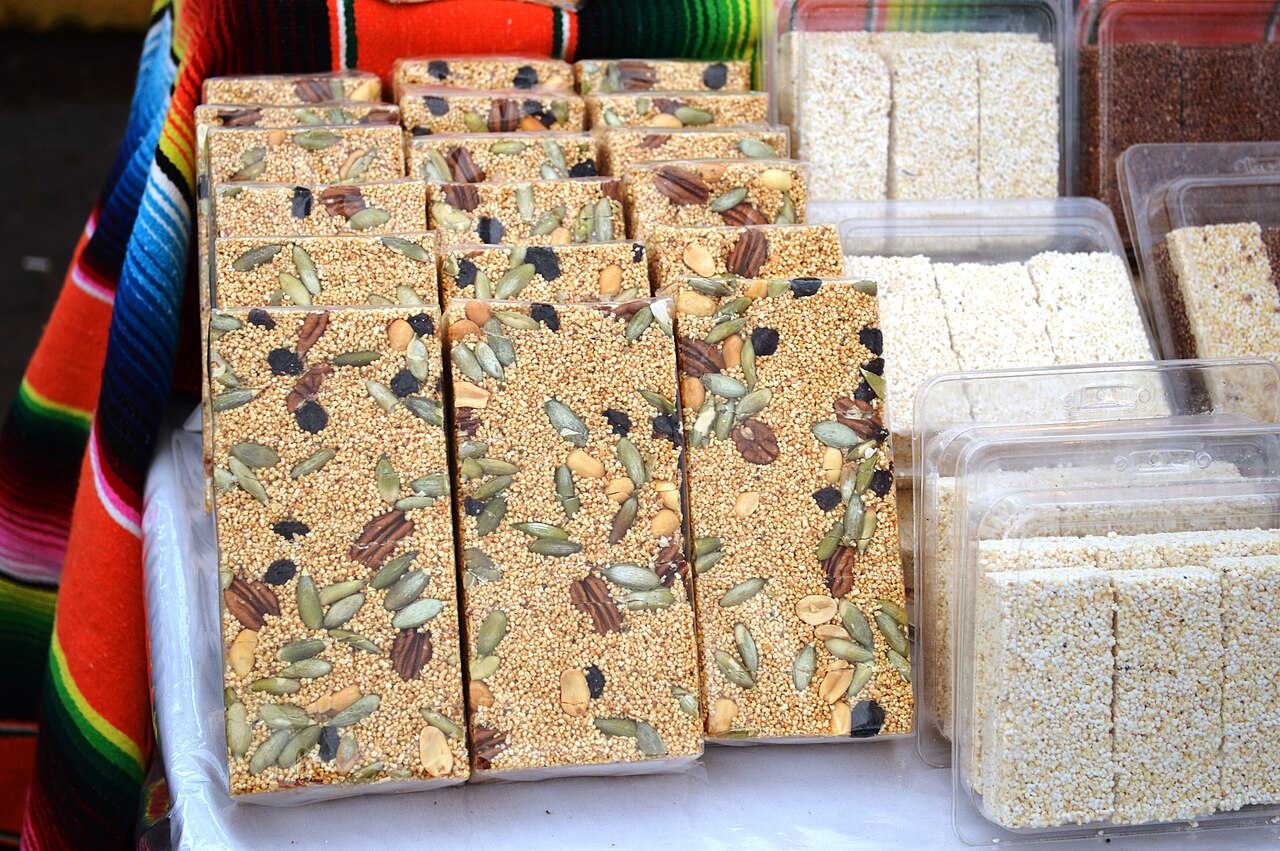
Today, amaranth is cultivated commercially on several continents. You can find it in health food stores as flour, puffed cereal, or whole grain. In Mexico, street vendors still sell alegría—“joy”—a traditional candy made from popped amaranth and honey, connecting modern consumers to a treat the Aztecs would have recognized.
The grain that colonial powers tried to eradicate is now marketed as a “superfood.” What was once forbidden is now fashionable.
What amaranth means here
Revival is not the same as repair. When old practices become new commodities, humanists ask what has been recovered, what has been renamed, and who benefits from the return.
Superfoods and Superweeds
The same qualities that make amaranth valuable as a crop—its hardiness, its rapid growth, its ability to thrive in poor conditions—also make its weedy relatives formidable agricultural pests.
Here is where amaranth’s story takes an unexpected turn. While cultivated amaranth species have been rediscovered as superfoods, their wild cousins have become something else entirely: superweeds.
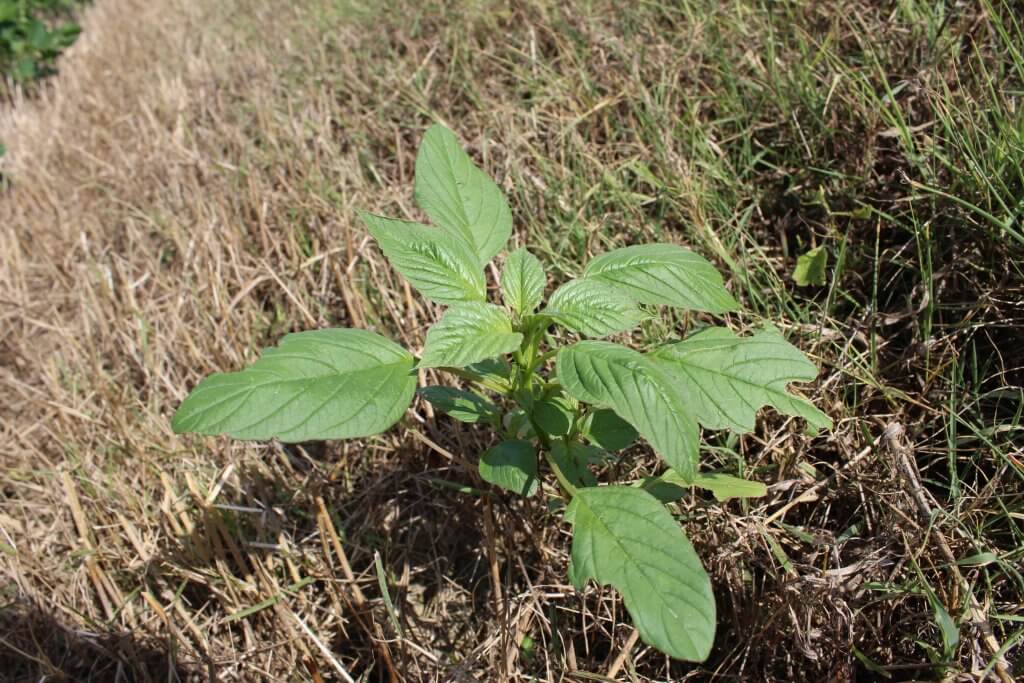
Palmer amaranth, or pigweed, can grow up to three inches per day and reach heights of seven feet, overwhelming crops like cotton and soybeans.
Palmer amaranth (Amaranthus palmeri), commonly known as pigweed, is native to the southwestern United States and northern Mexico. In its natural habitat, it’s just another plant. But in agricultural fields, it’s a nightmare.
A single Palmer amaranth plant can produce 400,000 seeds. It grows up to three inches per day, quickly overtaking crops and reaching heights of six to eight feet. In cotton fields, it can destroy harvesting equipment. Some Georgia farmers have simply abandoned fields to the weed.
The real crisis began in 2006, when populations of Palmer amaranth started showing resistance to glyphosate, the active ingredient in Roundup and the world’s most widely used herbicide. The resistance spread rapidly. Scientists discovered that resistant plants had amplified their EPSPS gene—the enzyme that glyphosate targets—sometimes producing over a hundred copies instead of the usual one or two. The plants simply overwhelm the herbicide with sheer genetic abundance.
What amaranth means here
Survival can look like resilience in one context and resistance in another. Meaning depends on where you stand, what you value, and what you are trying to protect.
The Contradictions Humanists Explore
With over sixty species, amaranth ranges from sacred grain to superfood to agricultural pest---embodying the contradictions that make humanities inquiry essential.
Growth from Variety
This brings us back to why we chose amaranth for a digital humanities studio.
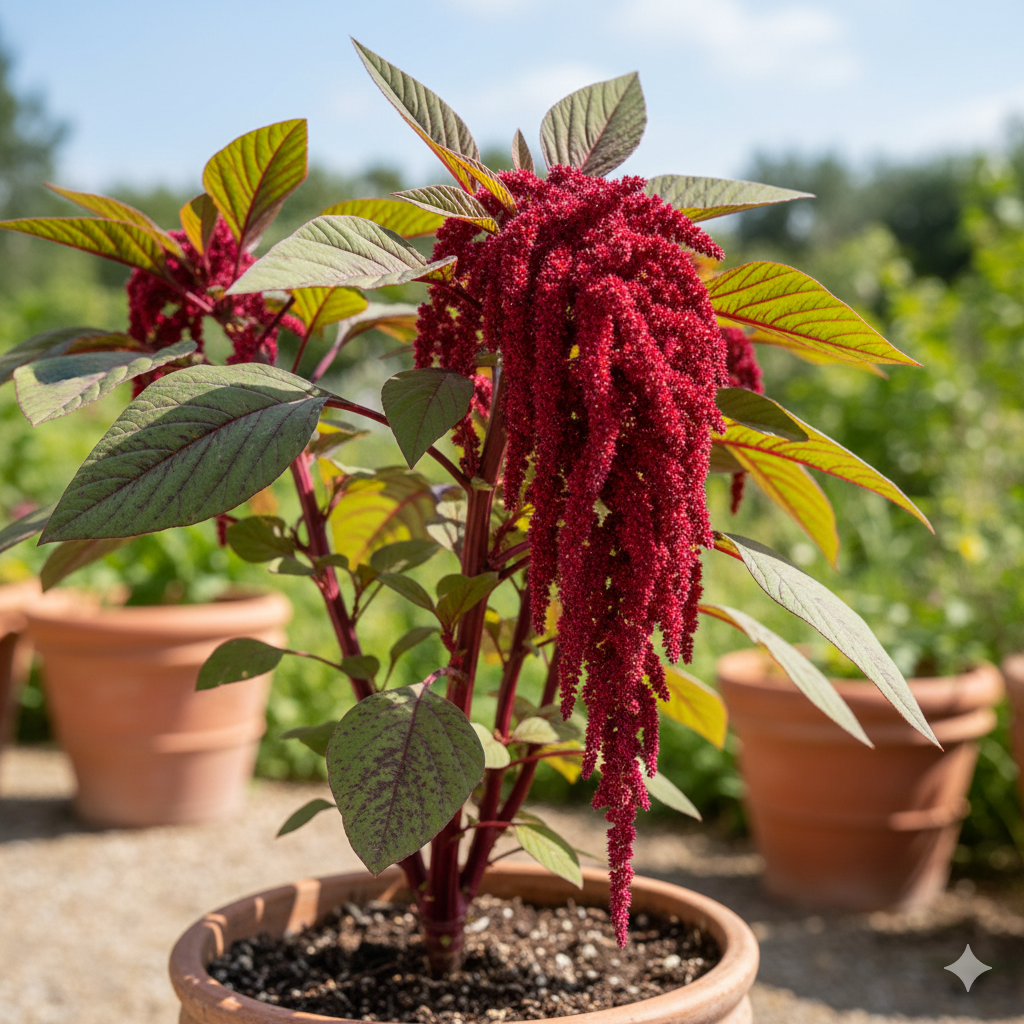
Hopi Red Dye amaranth, used for centuries to color traditional piki bread and textiles. The same plant family provides food, medicine, dye, and symbolic meaning.
Amaranth represents the inherent contradictions that humanists explore. The same plant family gives us sacred grain and stubborn weed, superfood and superpest, ancient tradition and modern biotechnology problem. One species feeds people; another resists every attempt to control it. The meaning depends entirely on context—who’s growing it, where, and why.
Throughout history and into the present, people have used dozens of amaranth species for an astonishing range of purposes: food, medicine, dye, religious ritual, and decoration. The Hopi used red amaranth to color their traditional piki bread. Ayurvedic practitioners prescribed it for inflammation and digestive troubles. Ancient Greeks hung it in temples; modern farmers curse it in their fields.
This diversity of uses—and meanings—makes amaranth a fitting metaphor for digital humanities work. Text analysis, mapping, visualization, digital archives, 3D modeling, virtual reality, oral history, web publishing—the possibilities multiply every year. Like amaranth itself, digital humanities grows in many directions, adapts to many contexts, and serves many purposes.
What This Has To Do With a Digital Humanities Studio
The humanities help us ask how meanings change: how a plant becomes a memorial flower, a sacred food, a banned substance, a commodity, a weed, or a metaphor. Those meanings are never built into the plant itself. They come from culture, power, memory, use, and interpretation.
That is also how we approach digital work. A website is never just a website. An archive is never just a collection of files. A map is never just points on a screen. Digital projects make arguments about what matters, who gets represented, how evidence is organized, and what future readers will be able to find.
Amaranth exists to help students, faculty, and community partners make those choices deliberately. We help people build public humanities projects that are engaging, accessible, and sustainable, while also asking the humanistic questions that keep technology from becoming merely technical: What should we preserve? Who is it for? What context does it need? What could this tool make visible, and what might it hide?
The Promise and the Paradox
We don’t pretend that digital projects achieve immortality. File formats change. Platforms shut down. Funding ends. Even well-maintained projects eventually face the question of what happens next. The digital realm is, in many ways, the opposite of unfading.
But the aspiration matters. We try to build projects that outlast their initial funding, that remain accessible after the conference presentation, that can be preserved and migrated and kept alive. We work with open source tools and sustainable practices because we have seen what happens when projects depend on proprietary platforms or abandoned software.
We chose amaranth because it captures both the hope and the irony of bringing technology and the humanities together.
The name also reminds us that preservation isn’t just a technical problem. The Spanish couldn’t eradicate amaranth because people cared enough to keep growing it, even at great personal risk. Digital projects survive when communities care enough to maintain them. The tools matter, but the commitment matters more.
Digital projects last when people keep caring for them: documenting choices, maintaining context, migrating files, teaching others, and remembering why the work mattered.
Finally, amaranth reminds us that context determines meaning. A plant that’s a sacred food in one setting becomes an invasive pest in another. A digital tool that gives one community more control might surveil another. The humanities help us think through these contradictions, to ask not just “what can we build?” but “what should we build?” and “for whom?”
Growing Something Together
Alegría, or ‘joy,’ a traditional Mexican candy made from popped amaranth and honey—a treat that connects modern consumers to ancient foodways.
So that’s why we’re called Amaranth.
We’re a studio that helps bring technology and the humanities together. We work with students, faculty, and communities to create digital projects—websites, archives, visualizations, interactive stories—that make humanities research accessible and engaging. We try to build things that last, knowing that nothing digital truly lasts forever.
We’re named for a flower that symbolizes immortality, a grain that sustained civilizations, a plant that refuses to die no matter how hard you try to kill it. We embrace the contradictions because the humanities have always lived in contradiction: between past and present, preservation and change, the universal and the particular.
Come by our studio in Mesa Vista Hall. Let’s grow something together.
References
Image Credits
Header image (botanical plate): Botanical illustration labeled “Amaranth Plant,” Plate 28 / Plate 137. Source file in repo does not include reliable provenance metadata; previous attribution to Curtis’s Botanical Magazine, Plate 137 could not be confirmed from the displayed image.
Globe amaranth flowers:Gomphrena globosa photograph. Source file in repo does not include reliable provenance metadata; previous Wikimedia/H. Zell attribution could not be confirmed from the displayed image.
Parkinson amaranthus background: John Parkinson, Paradisi in Sole Paradisus Terrestris, 1629, page 373, “Flower gentle.” Image drawn from the Internet Archive scan used for Project Gutenberg eBook #69425; public domain in the United States.
Codex Mendoza tribute detail: Detail from the Codex Mendoza, Bodleian Libraries, University of Oxford, MS. Arch. Selden. A. 1. The visible gloss identifies dried chile tribute bundles (“cargas de axi seco”), not amaranth.
Burning codices / colonial destruction background: Diego Rivera mural detail photographed by Wolfgang Sauber, showing the burning of Maya literature in the Palacio Nacional, Mexico City. Licensed under CC BY-SA 3.0 / GFDL.
Palmer amaranth (pigweed):Amaranthus palmeri photograph by Max Licher, via SEINet / Arizona Invasive Plants.
Amaranth varieties background: Source file in repo does not include reliable provenance metadata.
Parkinson, John. Paradisi in Sole Paradisus Terrestris. 1629.
Kauffman, C.S., and L.E. Weber. “Grain amaranth.” Advances in New Crops. Timber Press, 1990.
Milton, John. Paradise Lost. 1667.
Sauer, Jonathan D. “The Grain Amaranths and Their Relatives: A Revised Taxonomic and Geographic Survey.” Annals of the Missouri Botanical Garden, 1967.