Amaranth is a digital humanities studio at UNM built on a simple premise: the tool is never the point. The point is whether more people can encounter humanities work with curiosity, context, and care.
What Year One Was Actually For
Year one was an experiment to test whether humanities students and faculty—given open frameworks, encouraging documentation, and a studio they could walk into for a little help—could do digital work that deepens inquiry rather than just decorating it. And to see how many might want to step out of their comfort zone.
The early evidence is encouraging: collaborative class websites were launched, student projects for real public audiences were built, campus partnerships began to coelsce. We held a few of our own events and helped faciliate a few others. And a slowly accumulating sense of how best to help humanities faculty to experiment with new forms of class work, and what happens to students when they do.
By the Numbers
Numbers can’t tell you what it felt like when a graduate student realized their archive project was findable by the community it was about, or when an undergrad discovered that writing for the open web is harder and more interesting than for a Word doc destined for Canvas. But they give a sense of the scale.
Collaborative Websites
A collaborative class website adds a new layer of digital literacy to a course. Instead of writing a paper that only one person reads, students contribute to a shared project that lives on the web. Each contribution is small, but together they create something no one person could build alone. Students write more carefully, design more intentionally, and care more about clarity—and they leave with the experience of having built a digital thing, thinking about writing in a new way, and gaining confidence that they can make stuff.
We lucked out with adventerous open-minded collaborators, who worked to scaffold assignments around new workflows, and manage skill building that doesn’t always go smoothly. Students discovered that writing for the web is a genuinely different kind of writing. We’ve tried to lower the friction enough that the experiment feels doable even if uncertain: open templates through Xanthan, documentation you can actually follow, and people in the studio who’ve been through it before and can help when things go sideways.
“This particular assignment of creating a website finally changed the locks inside my brain and opened a door to a world of visualization and language that actually has the ability to communicate with others, mortal human beings outside academia… It had forced me to struggle with the concept of designing something that is pleasing to the eye, and create a text that wouldn’t bore the reader. When transforming into the virtual space of a website, I felt like I have to make an effort into writing in a way that is engaging, that you would want to continue scrolling down.”
— History Graduate Student, HIST 596-003, Madness in America
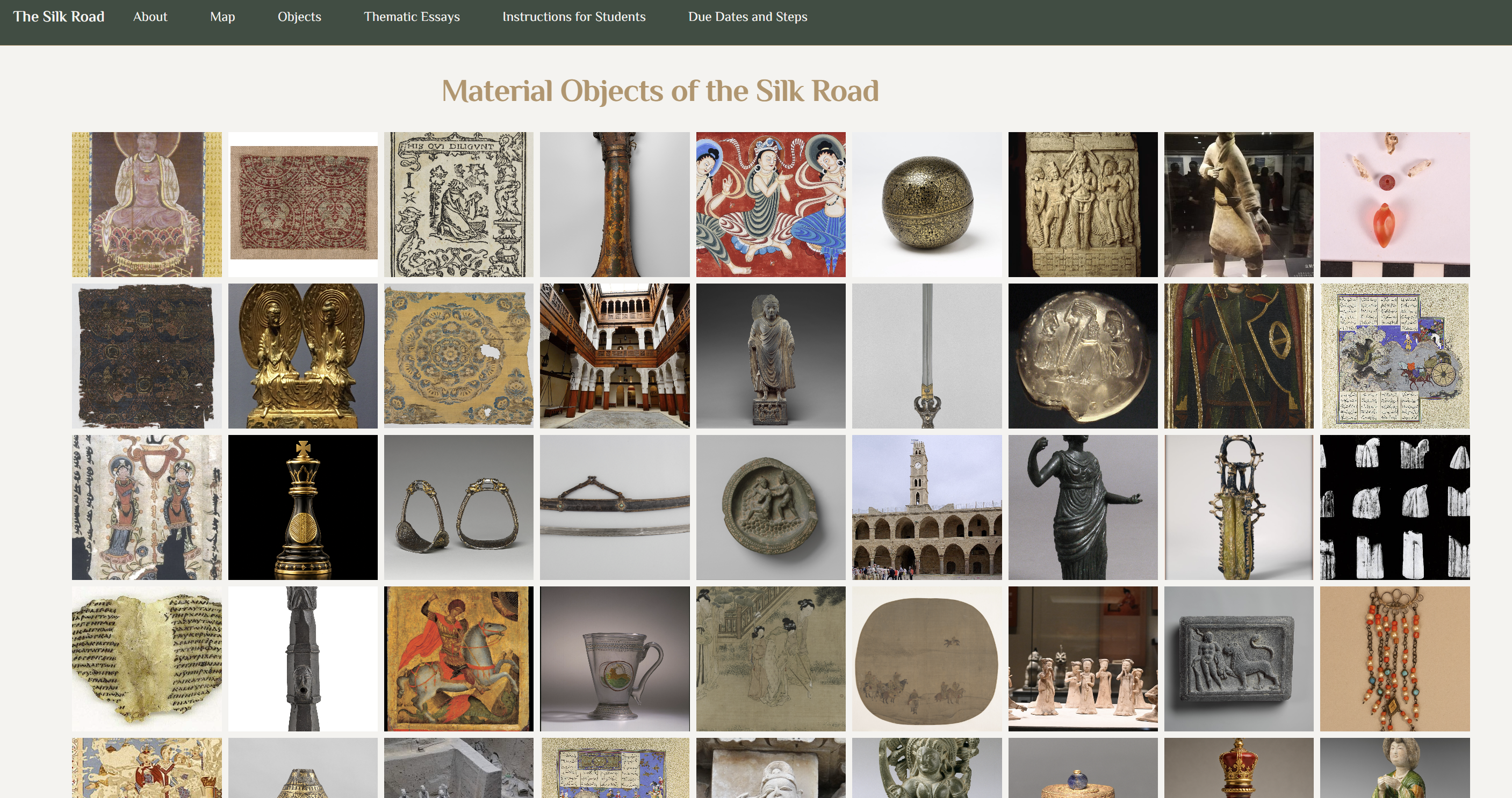
Silk Road
Students traced the movement of goods, ideas, and cultures across Central Asia, producing a multi-authored digital narrative that weaves together primary sources, maps, and original research.
Visit site →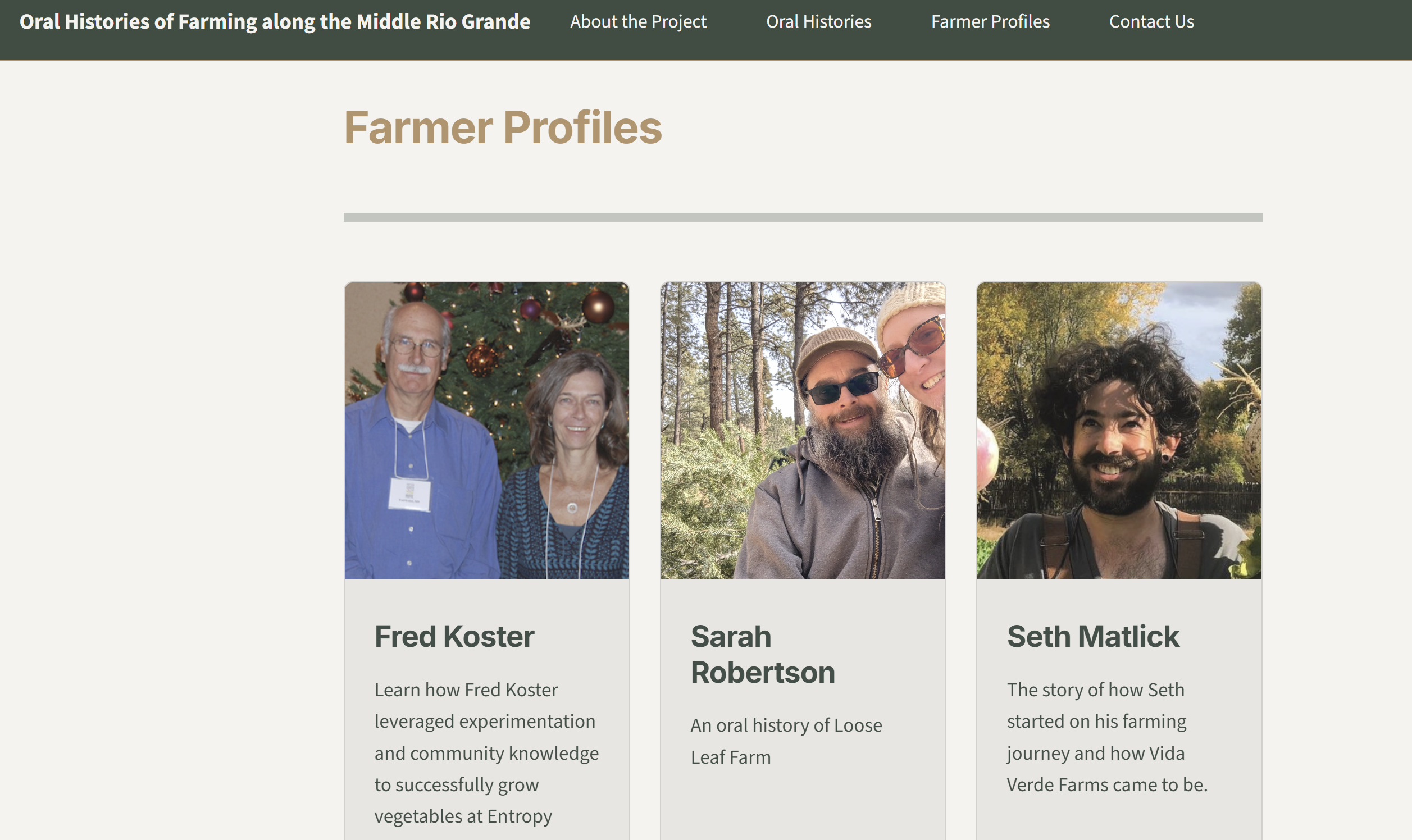
Rio Grande Farmer Oral Histories
Students conducted and archived oral history interviews with farmers along the Rio Grande, creating a searchable public record of agricultural knowledge, land memory, and community resilience.
Visit site →
Antifascist Women
A research site documenting the lives and activism of women who resisted fascism across Europe and Latin America, recovering figures often absent from mainstream historical narratives.
Visit site →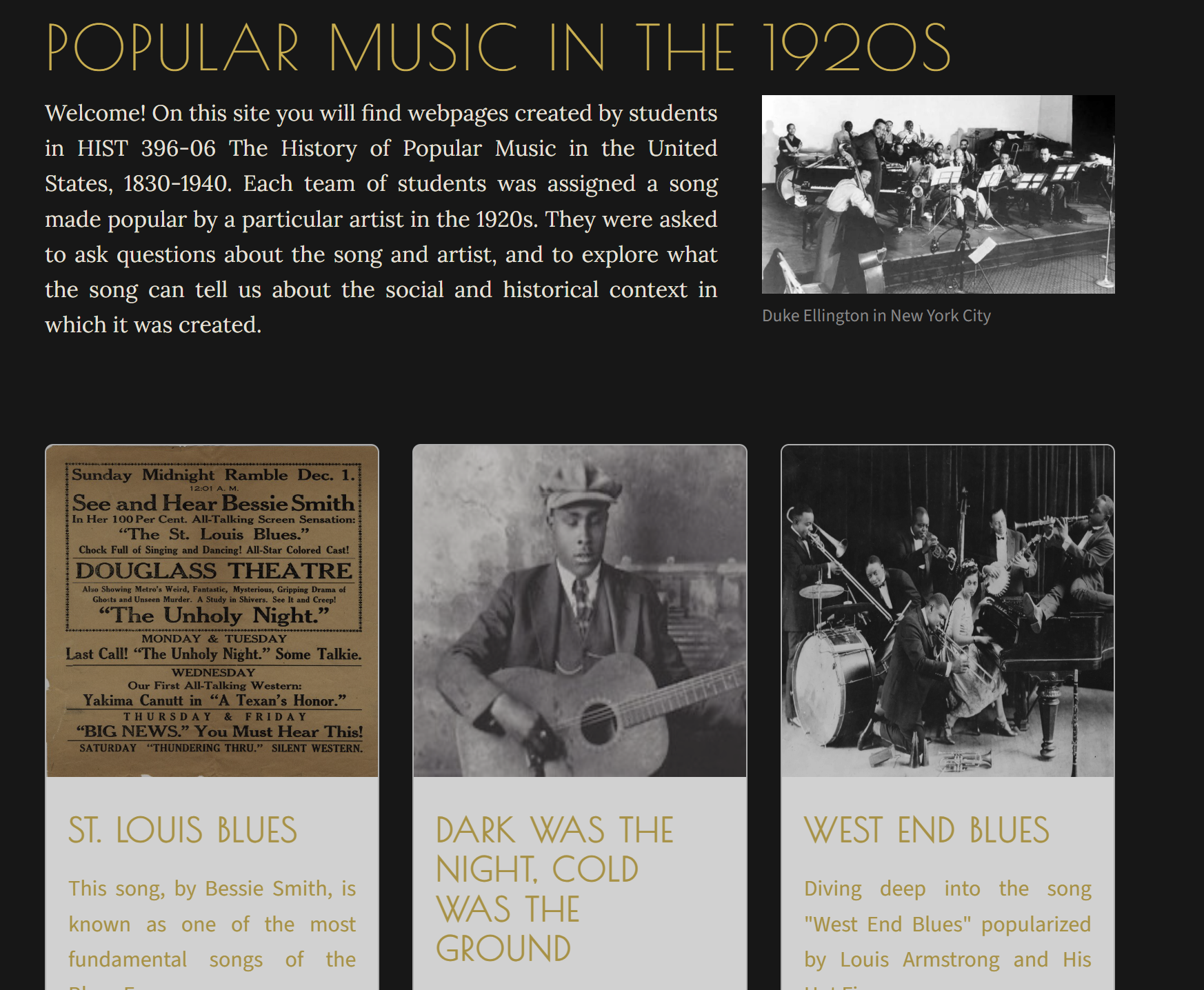
20th Century Music History
Students explored the social and political contexts of twentieth-century music, building a site that connects sound to history through annotated listening, timelines, and original analysis.
Visit site →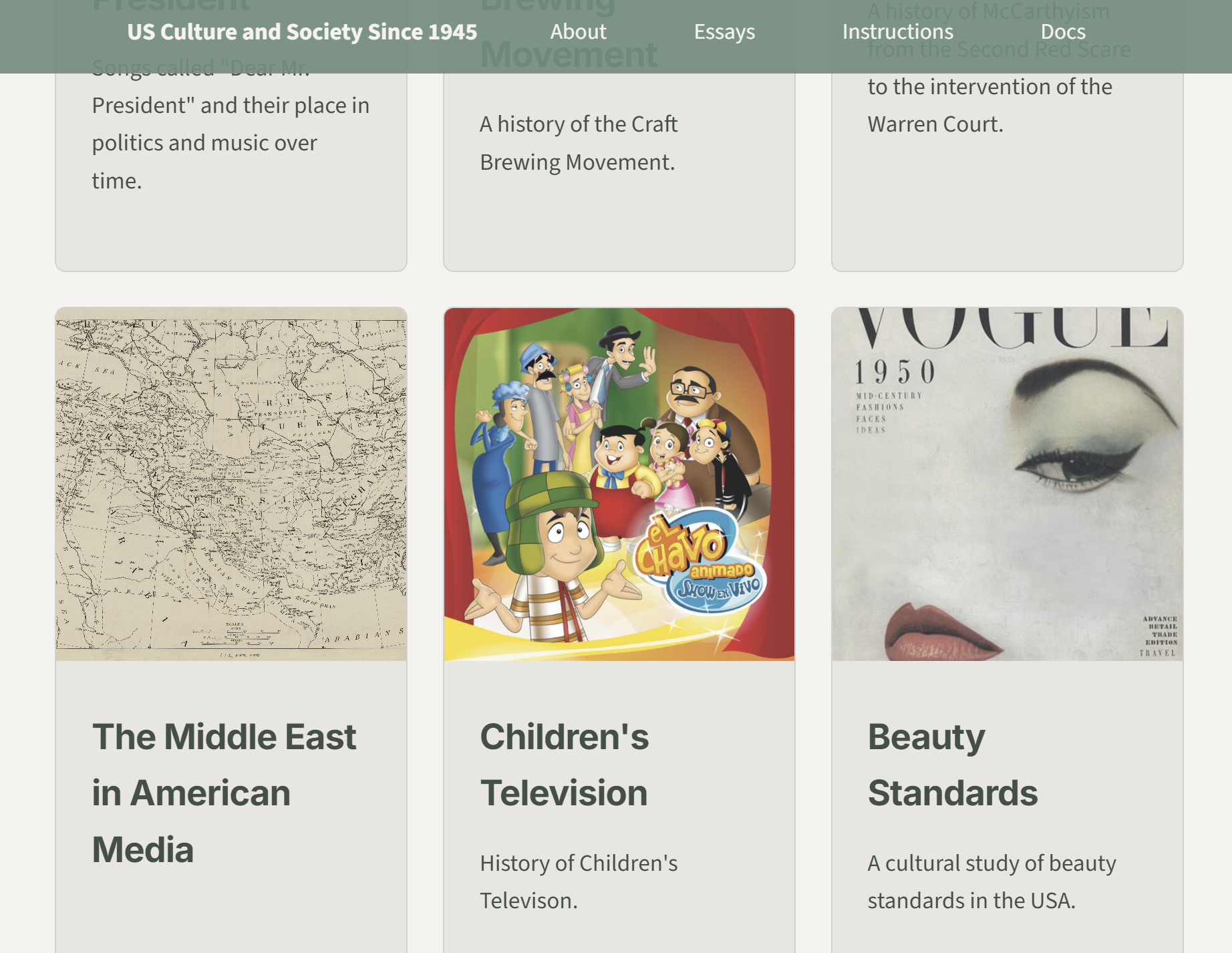
US Culture & Society Since 1945
Students built thematic essays on postwar American culture — suburbanization, counterculture, media, and identity — weaving together primary sources and historiographical context.
Visit site →
AAPI Experiences in New Mexico
An introductory history course produced this collaborative site documenting Asian American and Pacific Islander communities in New Mexico, drawing on local archives, interviews, and census records.
Visit site →
Food Stories
A student-built archive of stories about food, memory, and identity, collecting personal essays and oral history excerpts that reveal how what we eat shapes who we are.
Visit site →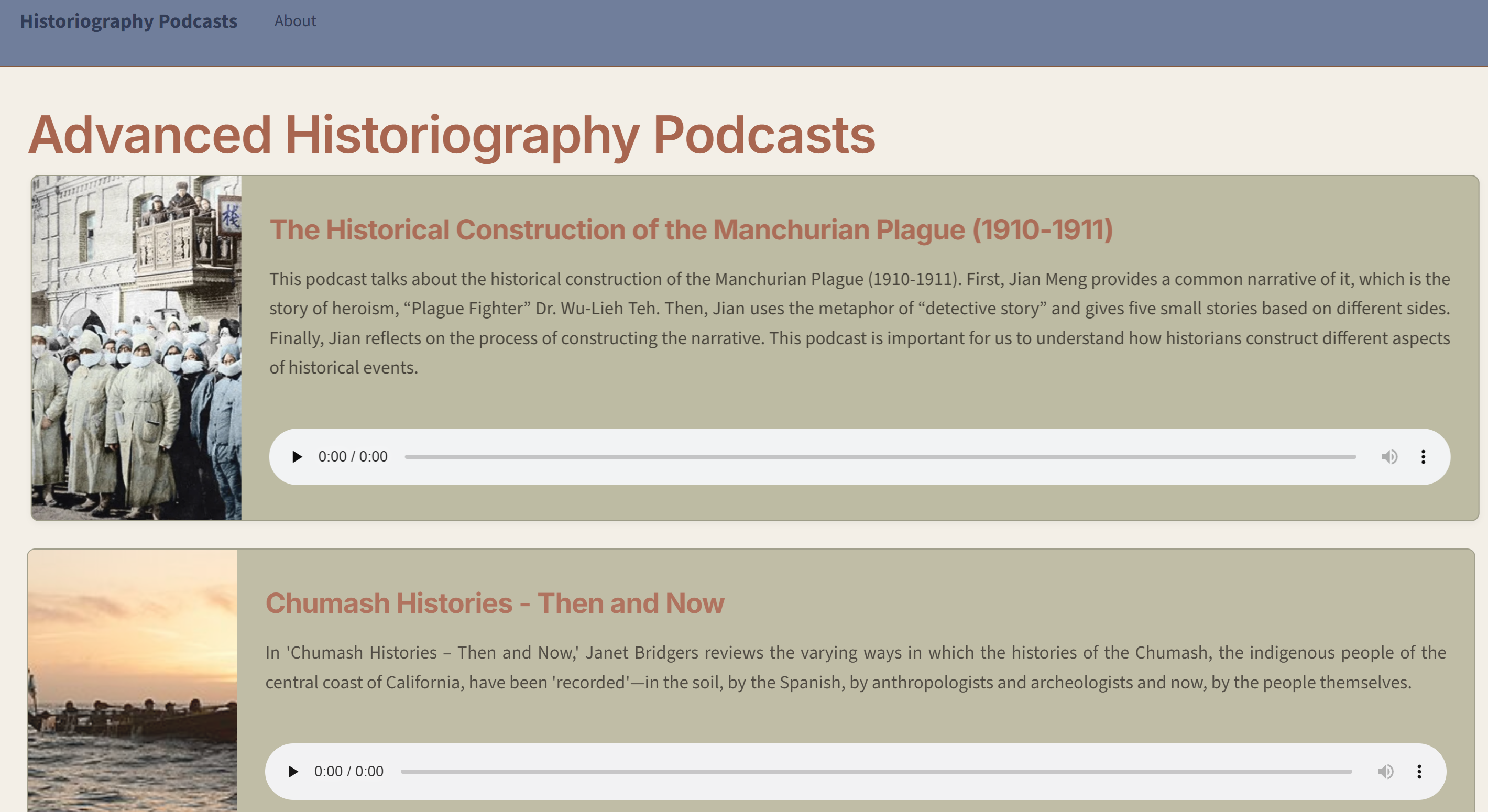
Advanced Historiography
Graduate students engaged foundational questions of historical method by writing public-facing essays that make debates about evidence, narrative, and interpretation accessible to general readers.
Visit site →Research
Alongside studio work, Amaranth is trying research experimenta that humanists can actually use — not hype, not hand-wringing, but careful and documented accounts of what works, what doesn’t, and what questions are worth asking next.
AI and Digital Humanities
The conversation about AI in higher education is buzzing, but not always productively. It seems like everyone could use more ideas. Amaranth’s AI Sketchbook is our attempt to help: a growing repository of real case studies on what AI can and cannot do for teaching and research. The hypothesis is that the skills humanists have always practiced — evaluating sources, recognizing bias, asking whose voices are missing — are exactly what separates meaningful AI use from mechanical AI use.
3D Pedagogy
Some things cannot be understood from photographs. This year we printed replicas of IUDs manufactured in Mexico during the 1970s, a model of the Jewish neighborhood in medieval Worms, ancient Mesopotamian cylinder seals, the terrain of the Santa Fe Trail, and much else. When students handle a replica, turn it over, compare it to something else they can hold, they ask different questions. That’s the whole idea. Read more →
Emerging Technologies and Consumption of History
The initial ARRRG cohort–Amaranth Really Robust Research Group–was a group of spirited independent study students spent the year asking how digital tools reshape storytelling, preservation, pedagogy, and public memory. . Read more →
Events
From the History Department’s Welcome Back Days to the CNM Learning Summit to the WGSS Graduate Showcase, Amaranth was busy. Some events were ours to organize; most were invitations from partners who wanted a little help.
- Amaranth Open House
- History Dept. at Welcome Back Days
- Portfolio websites workshop
- Poster design workshop
- HGSA Poster Contest
- IMS Medieval Faire
- CNM Learning Summit
- WGSS Grad Showcase
- CTL Professional Portfolio Websites
- Native American History Showcase
- Maxwell Museum Artifact Scanning
What Year Two Might Be For
Year one was about establishing that the studio is worth pursuing. Year two is about finding out how much further the experiment can go.