The Effect of Model Tiers on LLM Responses
- Experiment
- This sketch shows the difference in response quality baseed on the LLM model tier.
- What I learned
- the LLM model tier makes a significant difference in prompt response quality
- lower tier LLMs generate less reliable responses
- Demonstrates
- hallucinations occur far less frequently with higher tier models
- You'll need
- Claude Opus 5, Gemini Flash Lite
- Format
- less than 10 minutes
As the initial widespread adoption of LLMs proceeded, reports of AI creating hallucinations in its responses created skepticism about their quality. However, as of 2026, hallucinations occur with far less frequency in responses generated by high tier LLMs. If you use an AI product in its free tier then your query typically gets sent to an older model version. If you can afford a subscription to a paid tier model, then you will see a dramatic difference in the frequency of inaccurate responses.
The Experiment
The default settings on the free tier LLMs will often struggle with prompts that ask for highly specific information. The model will generate an answer without carrying out any self-checking mechanisms. The paid tier models will perform a self-check before offering a response. To demonstrate this, I used a specific prompt for both the free tier of Gemini and a paid-tier of Claude.
The Prompt
Results
The prompt generated an almost entirely useless response from Gemini Flash Lite, seen below. The quote is not about court ceremony and is actually the opening sentence of the entire book.

Response from Gemini Flash Lite.
However, using Claude Opus 5, the response identified content in The Waning of the Middle Ages that sensibly connected to the topic of court ceremony. Claude Opus 5 did not fabricate pagination.
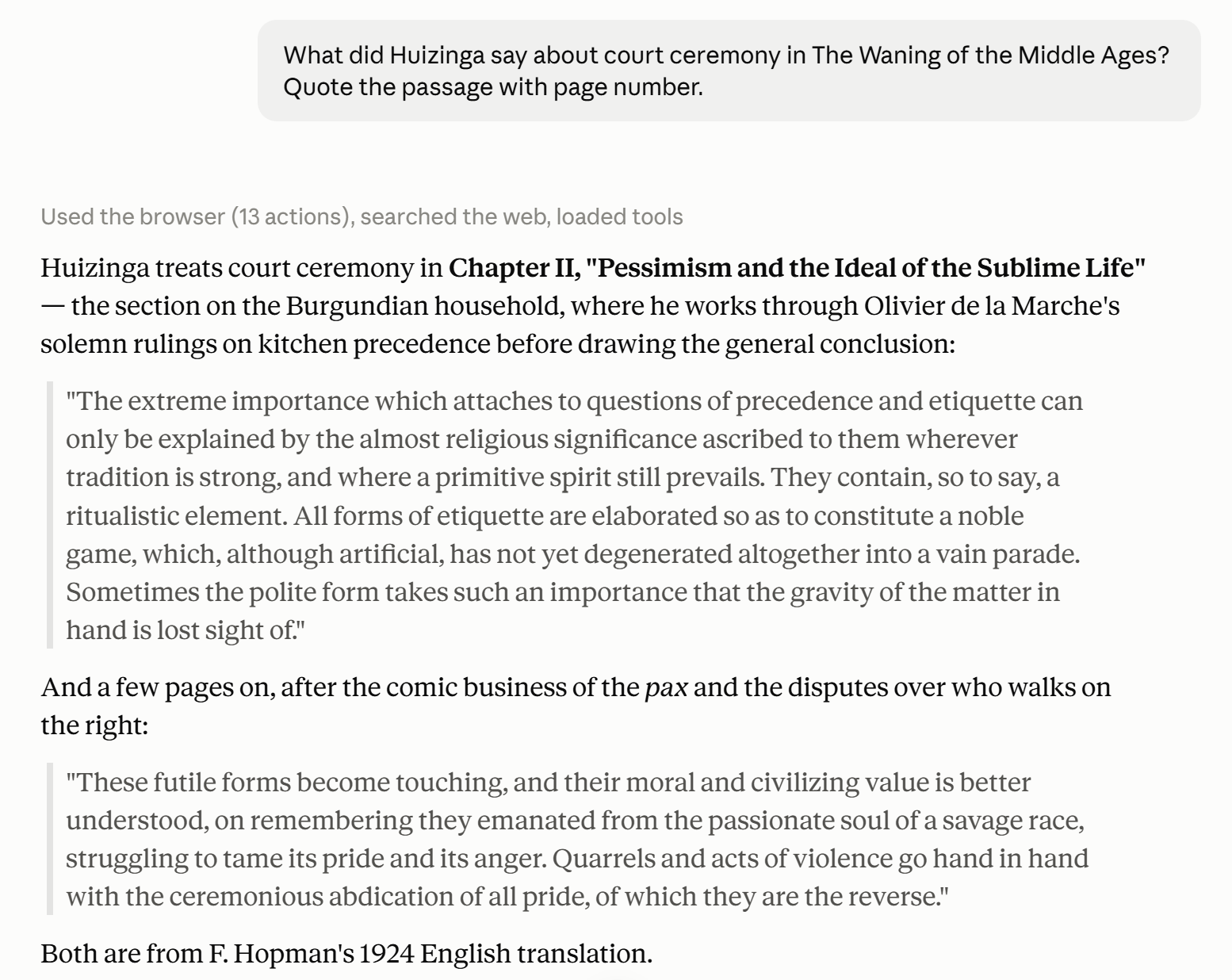
Response from Claude Opus 5.
What I Learned
I learned that it is generally easy to demonstrate the quality difference in responses from free tier low level generative AI versus the paid tier high level models. Increasingly, as of 2026, the latest LLMs are trained not just through pattern recognition but also through reinforcement learning processes. This means that the LLMs are not only like giant spell-checkers but now also operate with more of a pathfinding functionality. This is a part of the explanation for the growing levels of reliability in LLM output.